
Research
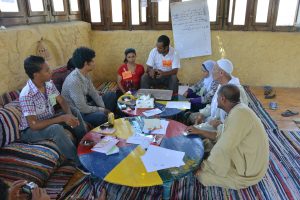
Since the mid-1990s, CDS has been a leading organization in the use of participatory research approaches in rural and urban settings. Heavily engaged in adapting such research technology into various situations, CDS aims to bring the voices of community groups at grassroot level to the forefront of development planning and policy making. Over the years, CDS has trained hundreds of practitioners on the use of participatory tools and techniques to develop alternatives for evidence-based action. Whenever appropriate, we combine both quantitative and qualitative methodologies, using surveys to complement the qualitative research tools such as focus group discussions, semi-structured interviews, physical mapping, trend analysis, ranking, among many others.
Monitoring, Evaluation, Accountability and Learning
CDS customarily adopts the evaluation framework to answer questions of relevance, effectiveness, efficiency, and impact. We also emphasize those processes that help our clients use the recommendations gained from evaluations and convert them into decisions and actions, involving all concerned in their endeavors to make improvements in the execution and in the achievement of goals. According to the scope and scale of required evaluation, CDS uses a set of tools and indicators that allow either quantitative, qualitative, or both assessments.
Training
CDS has more than 30 years of experience in planning, implementing, and evaluating training programs. In addition to custom-tailoring training interventions to meet our clients’ needs, we conduct from time to time our own off-shelf training activities. CDS is renowned in the training field as a pioneer in the use of interactive training methodologies to foster learning and achieve the intended training aims. To assure success of training interventions, we work with our clients to systematically assess and analyze training needs before training solutions are set forth.
Capacity Building
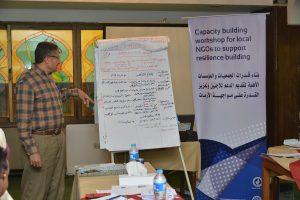
CDS’ approach to capacity building focuses on enabling organizations to develop their capacity building plans based on their own experiences, meticulous assessment of needs, analysis of organizational systems, and future aims. It is CDS’ belief that capacity building can only be sustained in organizational cultures that are driven towards excellence, growth and wealth. The creation or enhancement of such a culture is a vast effort that requires more than effective training and technical assistance skills. It requires professionals with deep understanding of the intricate process of organizational learning and change, and are able to walk the organizational members toward the desired future. This approach is conducted through a series of coordinated activities within a capacity building framework leading to enhancing organizational performance and effectiveness.