
Health
- Health Management
- Healthcare Service Delivery
- Preventive Medicine
- Reproductive Health and Sexuality
- HIV/AIDS
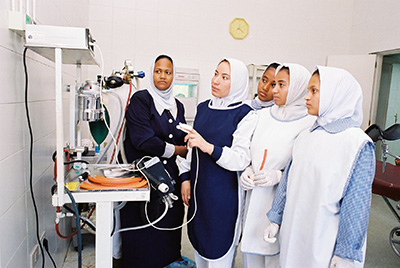
The basic philosophy that guides the health program is that multiple social, economic, cultural, and psychological factors lie behind the health-related phenomena, and cannot, therefore, be resolved by medical science alone. The research activities within the health program essentially look into the roles social factors play in determining health and illness, status and career of health care professionals, knowledge and attitude of various population groups toward health-related issues, disparities in health service delivery, and people-health care institutions relationships and roles.
Agriculture, Environment, Climate Change and Water and Environment
- Natural resources management
- Agribusiness
- Agro-Ecology
- Eco-Health
- NRM and climate change adaptation
- Water Resources Management
- Urban and rural Water Supply and Sanitation
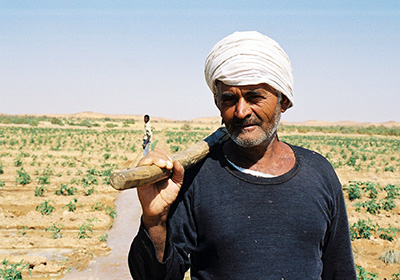
CDS work in Agriculture is usually associated with how the specific communities can improve their livelihood and economic conditions through using environmental challenges as pillars for positive and sustainable change. The attention we give to the role of women in this particular areas is driven from our years of field research that proven many times that women play a vital role in agriculture and how it affects climatic conditions and water usage.
Gender and Social Rights
- Gender Equality
- Economic empowerment
- Child Care and Development
- Youth Empowerment
- Support to vulnerable groups (incl. youth and migrants)
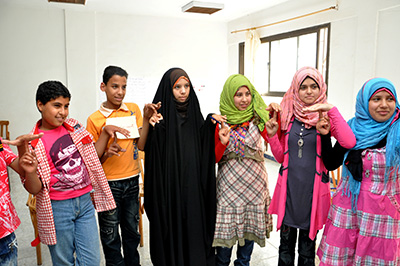
Our experience in the Gender and Social Rights cover many target groups and sectors. We primarily aim to support individuals and communities to become empowered socially, economically, politically and culturally. Gender is always a cross-cutting theme. Like any other aspect of life, gender relations in a particular society or community are shaped by the economic, social and cultural context (including the powerful forces of religion and traditions), in which people are raised and live.
Corporate Social Responsibility (CSR)
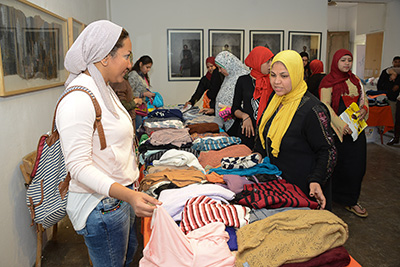
CDS seeks to assist companies in planning and undertaking their CSR initiatives as well as bring new companies to adopt CSR as a policy and practice. The program, in particular, challenges businesses to mobilize their technical and financial resources, improve their CSR performance and have positive impact in the communities where they operate. It customarily works through partnerships it develops with the public, private and civil society organizations in planning and undertaking innovative development initiatives. Through consulting, we help companies formulate their CSR strategy, support them to implement cost-effective and sustainable development projects that meet the community’s needs, engage employees in CSR activities, and develop CSR reports. Promoting CSR as a concept and practice within the local business community has been one of our early objectives, through highlighting the business case of CSR for private enterprises, conducting research related to CSR concept and practice, and publishing CSR best practices. Over the past few years, we have been collaborating with a large number of companies including Barclays Bank, Levis, General Motors, Microsoft, P&G, Raya Holding, Vodafone, and Unilever, among others.
Community Development
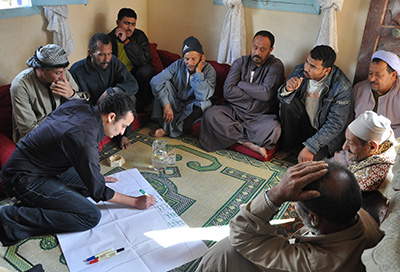
CDS views urban and rural communities as made up of people who have common values and goals and who are capable of enlisting and directing the support needed to achieve their objectives. A complex and extended system of social relationships forms the basis of this network of mutual support and shared responsibility. This then is translated into the social capital needed to realize community potential. Necessary to the overall process of community revitalization, CDS has done significant work to assist local institutions, local government, NGOs, cooperatives and enterprises to develop their own capabilities to expand participation, identify problems and needs, explore alternatives, develop appropriate solutions and mobilize financial and other resources for much needed local community programs and activities. Based on such views, CDS believes interventions must seek to enhance existing assets which helps realize the aspirations of those most directly concerned. Sound rehabilitation programs must be firmly rooted in a more comprehensive process of community-building where local interest groups, public and private institutions work together to ensure a better future for targeted communities. Through an integrated approach to urban development, we believe that we could build more stable and healthier communities where people can achieve economic self-sufficiency and take responsibility for their future and that of their families.
Governance
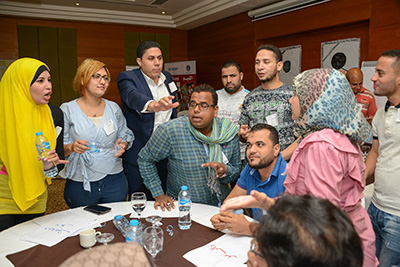
The focus of CDS’ work in the realm of governance has been on enhancing citizens’ participation in the planning and management of development work, and sensitizing the government officials, CSOs, and academia to be responsive to such participation. We believe that ‘good governance’ is dependent on ‘people’s participation’ and that peoples’ competencies, knowledge and personality attributes are indispensable to participatory processes. ‘Capacity building’ of organizations and individuals in the government sector, civil society, and at community-level has dominated much of CDS’ work since its inception, aiming to enhance people’s capabilities and access to knowledge and resources, as well as facilitate processes for their free association. In its governance-related work, CDS emphasizes the inclusion of the disadvantaged groups that are more prone than others to exclusion and discrimination, namely women, the poor, youth, and children. Specifically, CDS has been working during the past few years with Egyptian youth from 25 governorates, developing their skills and helping them network with governmental institutions and NGOs. Giving them a platform to develop themselves and their ideas to be better and active citizens within their communities.
Health
- Health Management
- Healthcare Service Delivery
- Preventive Medicine
- Reproductive Health and Sexuality
- HIV/AIDS
The basic philosophy that guides the health program is that multiple social, economic, cultural, and psychological factors lie behind the health-related phenomena, and cannot, therefore, be resolved by medical science alone. The research activities within the health program essentially look into the roles social factors play in determining health and illness, status and career of health care professionals, knowledge and attitude of various population groups toward health-related issues, disparities in health service delivery, and people-health care institutions relationships and roles.
Agriculture, Environment, Climate Change and Water and Environment
- Natural resources management
- Agribusiness
- Agro-Ecology
- Eco-Health
- NRM and climate change adaptation
- Water Resources Management
- Urban and rural Water Supply and Sanitation
CDS work in Agriculture is usually associated with how the specific communities can improve their livelihood and economic conditions through using environmental challenges as pillars for positive and sustainable change. The attention we give to the role of women in this particular areas is driven from our years of field research that proven many times that women play a vital role in agriculture and how it affects climatic conditions and water usage.
Gender and Social Rights
Gender Equality
Economic empowerment
Child Care and
Development
Youth Empowerment
Support to vulnerable groups (incl. youth and migrants)
Our experience in the Gender and Social Rights cover many target groups and sectors. We primarily aim to support individuals and communities to become empowered socially, economically, politically and culturally. Gender is always a cross-cutting theme. Like any other aspect of life, gender relations in a particular society or community are shaped by the economic, social and cultural context (including the powerful forces of religion and traditions), in which people are raised and live.
Corporate Social Responsibility (CSR)
CDS seeks to assist companies in planning and undertaking their CSR initiatives as well as bring new companies to adopt CSR as a policy and practice. The program, in particular, challenges businesses to mobilize their technical and financial resources, improve their CSR performance and have positive impact in the communities where they operate. It customarily works through partnerships it develops with the public, private and civil society organizations in planning and undertaking innovative development initiatives. Through consulting, we help companies formulate their CSR strategy, support them to implement cost-effective and sustainable development projects that meet the community’s needs, engage employees in CSR activities, and develop CSR reports. Promoting CSR as a concept and practice within the local business community has been one of our early objectives, through highlighting the business case of CSR for private enterprises, conducting research related to CSR concept and practice, and publishing CSR best practices. Over the past few years, we have been collaborating with a large number of companies including Barclays Bank, Levis, General Motors, Microsoft, P&G, Raya Holding, Vodafone, and Unilever, among others.
Community Development
CDS views urban and rural communities as made up of people who have common values and goals and who are capable of enlisting and directing the support needed to achieve their objectives. A complex and extended system of social relationships forms the basis of this network of mutual support and shared responsibility. This then is translated into the social capital needed to realize community potential. Necessary to the overall process of community revitalization, CDS has done significant work to assist local institutions, local government, NGOs, cooperatives and enterprises to develop their own capabilities to expand participation, identify problems and needs, explore alternatives, develop appropriate solutions and mobilize financial and other resources for much needed local community programs and activities. Based on such views, CDS believes interventions must seek to enhance existing assets which helps realize the aspirations of those most directly concerned. Sound rehabilitation programs must be firmly rooted in a more comprehensive process of community-building where local interest groups, public and private institutions work together to ensure a better future for targeted communities. Through an integrated approach to urban development, we believe that we could build more stable and healthier communities where people can achieve economic self-sufficiency and take responsibility for their future and that of their families.
Governance
The focus of CDS’ work in the realm of governance has been on enhancing citizens’ participation in the planning and management of development work, and sensitizing the government officials, CSOs, and academia to be responsive to such participation. We believe that ‘good governance’ is dependent on ‘people’s participation’ and that peoples’ competencies, knowledge and personality attributes are indispensable to participatory processes. ‘Capacity building’ of organizations and individuals in the government sector, civil society, and at community-level has dominated much of CDS’ work since its inception, aiming to enhance people’s capabilities and access to knowledge and resources, as well as facilitate processes for their free association. In its governance-related work, CDS emphasizes the inclusion of the disadvantaged groups that are more prone than others to exclusion and discrimination, namely women, the poor, youth, and children. Specifically, CDS has been working during the past few years with Egyptian youth from 25 governorates, developing their skills and helping them network with governmental institutions and NGOs. Giving them a platform to develop themselves and their ideas to be better and active citizens within their communities.